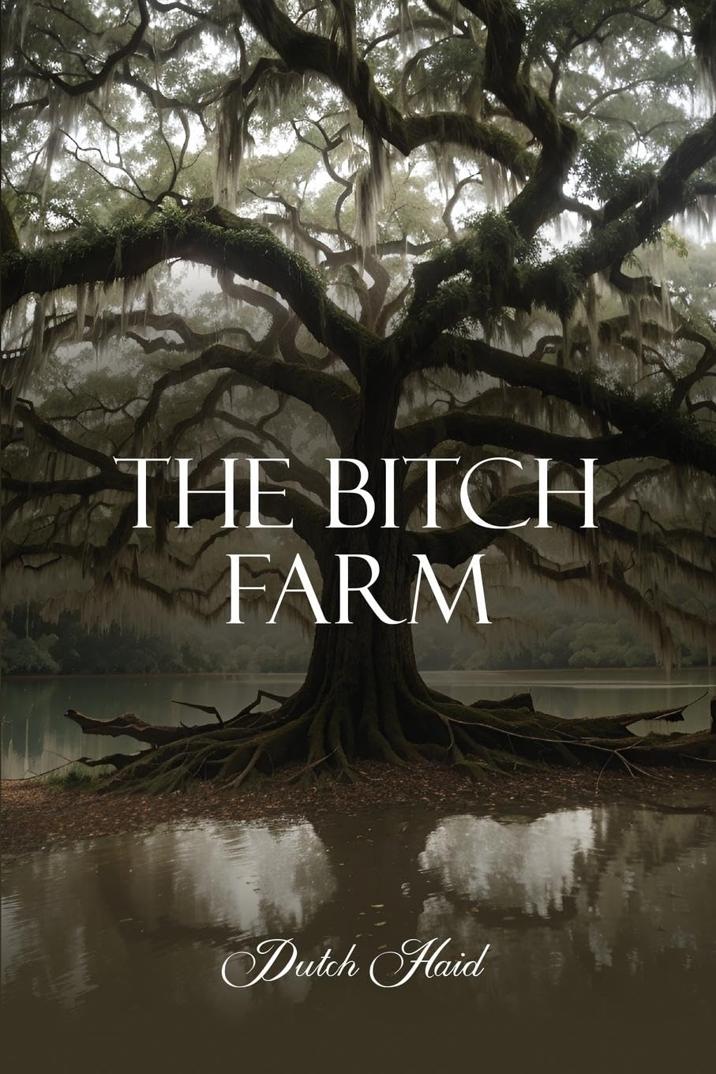
In Dutch Haid’s “The Bitch Farm”, the chilling narrative pulls readers deep into the shadows where darkness thrives and malevolence takes root. Among the twisted characters that inhabit this psychological thriller, Zac stands out as a figure meticulously grooming himself for something unspeakably sinister. His calculated movements, sharp instincts, and internal monologue reveal not just a man on a mission but an individual honed by fear, anticipation, and the mentorship of pure evil.
The passage detailing Zac’s preparation for his latest ‘deed’ is a masterclass in suspenseful storytelling. The setting—a shadow-draped patio bathed in moonlight—serves as both a literal and metaphorical stage for Zac’s descent into darkness. The ominous quiet, punctuated only by the symphony of crickets and his racing heartbeat, amplifies the tension, drawing readers into the suffocating stillness that precedes the storm.
Zac’s ritualistic approach to his task showcases the depth of his conditioning. His reliance on tools like the circular glass cutter, gloves, and even the strategic use of shadows speaks to a mind obsessed with control and precision. However, the unexpected simplicity of an unlocked door triggers an unsettling reaction. His frustration at this ‘convenience’ is not rooted in relief but in the disruption of his meticulously crafted routine. This deviation forces Zac to confront a vulnerability he seldom acknowledges—the fear of losing his edge.
The internal dialogue that follows is both revealing and disturbing. Zac’s self-deprecating critique, laced with dark humor, paints a portrait of a man both confident in his capabilities and haunted by the fear of inadequacy. His sarcastic reflection on being ‘rusty’ after a hiatus from his crimes exposes a twisted sense of pride in his ‘craft.’ The chilling phrase, “That makes the score of this game Zac one and the bitch zero,” reduces his target to a mere point in a grotesque game, stripping away humanity and underscoring his moral decay.
Dutch Haid masterfully intertwines Zac’s thoughts with flashbacks of James’s influence, hinting at a manipulative mentor-mentee dynamic rooted in psychological dominance. James’s instructions echoed in Zac’s mind, serve as a haunting reminder of the pervasive control exerted over him. The directive to ‘sit tight and wait’ after a mishap is more than tactical advice; it’s a psychological leash, ensuring Zac’s actions remain tethered to James’s dark legacy.
Through Zac’s meticulous preparations, The Bitch Farm delves into the anatomy of evil. It’s not just about the acts committed but the psychological grooming, the rehearsed rituals, and the internal dialogues that precede them. Zac’s devilish preparations are a window into a soul corrupted by influence, fear, and an insatiable need to prove himself within the twisted hierarchy of his dark world.
For readers brave enough to venture into the pages of The Bitch Farm, Zac’s journey serves as a chilling exploration of how evil is not always born but often carefully crafted, nurtured in the shadows, and unleashed with terrifying precision.