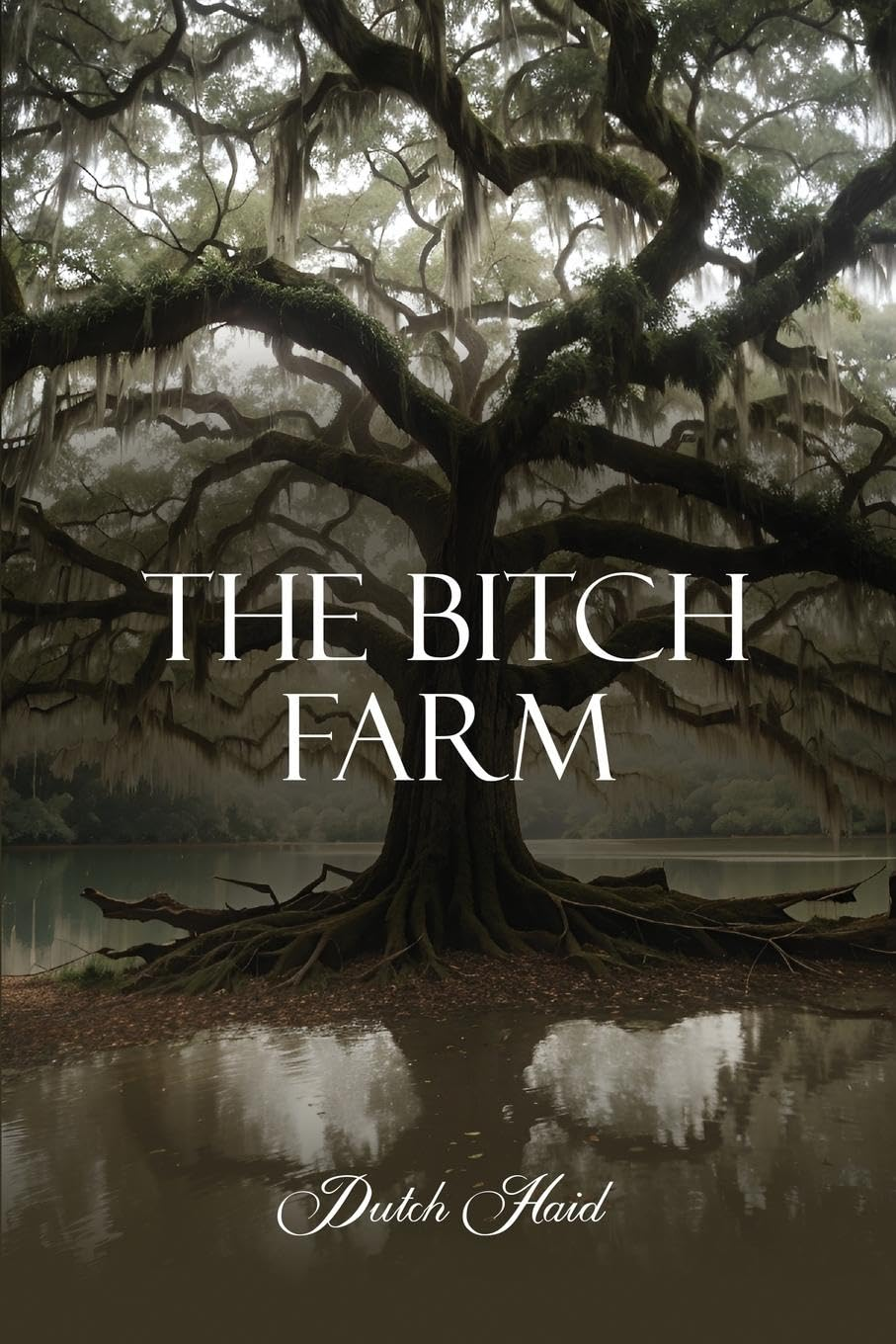
In The Bitch Farm, Dutch Haid takes readers into the depths of a fractured psyche, where James, a man shattered by trauma, finds solace and action through his alter-personality Zac. Together, they exist in a grim partnership, their conversations a chilling reflection of their shared depravity and complex dynamic.
The Dialogue of Darkness
James and Zac’s conversations are not the frantic ramblings one might expect of a disjointed mind. Instead, they are chillingly logical, laced with dark humor and grim efficiency. Zac, the executor of James’s murderous impulses, often praises James’s meticulous planning, reveling in the ease of his gruesome deeds thanks to James’s foresight.
“James, you certainly have made things easier for me this time,” Zac mutters as he inspects the rented van, admiring the modifications. The new electric garage door, the oversized backpack with padded straps, and the aptly named “bitch-case” are tools of their shared trade. James, the mastermind, remains an invisible yet omnipresent figure in Zac’s actions, guiding him like a ghostly puppeteer.
This self-dialogue becomes a coping mechanism, a way for James to separate himself from the heinous acts while allowing Zac to thrive in his role as the executioner. It’s a twisted form of delegation, where morality and guilt are passed off to another facet of his personality.
A Cemetery of Secrets
The cemetery—dubbed “The Bitch Farm”—is more than a burial ground. It is a macabre stage for James and Zac’s shared theatrics, a place where their collaboration flourishes. In his sardonic musings, Zac often jokes about the cemetery’s dual purpose.
“I do plant some fascinating objects in the cemetery, don’t I?” Zac giggles, pondering the idea of “bitch trees” sprouting from the graves of his victims. The cemetery becomes a grotesque metaphor, a place where the line between life and death is blurred by their actions.
For James, the cemetery serves as a grim inheritance, a physical connection to a father he never knew. For Zac, it’s a playground for his depravity, a place where he can freely execute James’s plans without interference. Together, they transform the cemetery into a grotesque canvas, their twisted bond etched into every unmarked grave.
The Psychotic Partnership
James and Zac’s relationship is a dark symbiosis. James, the planner, relies on Zac’s physicality and lack of remorse to carry out the murders. Zac, in turn, admires James’s ingenuity, treating him as a mentor and provider. Their conversations are steeped in gratitude and camaraderie as if they were two colleagues discussing a successful business venture.
Yet, beneath this partnership lies a disturbing truth: James uses Zac as a scapegoat, a way to distance himself from the consequences of his actions. Zac, in his devotion, accepts this role, embodying the dark desires James cannot face.
“James, you’re brilliant,” Zac says, his words tinged with admiration. But even in his praise, Zac acknowledges the shared responsibility of their actions, referring to the cemetery as “ours” and joking about their grim harvest.
The Fractured Reality
Through James and Zac’s conversations, The Bitch Farm explores the complexity of dissociative identity disorder (DID). The condition, often stemming from severe trauma, allows James to compartmentalize his actions, assigning blame and responsibility to Zac. This division creates a chilling narrative, where the reader is both repulsed by and drawn to their dynamic.
Haid masterfully uses these interactions to delve into the blurred lines between reality and delusion. James and Zac’s conversations are a reflection of a mind at war with itself, where morality and depravity coexist in a fragile balance.
Conclusion: A Mind Unveiled
In The Bitch Farm, the psychotic condition of James is not just a plot device but a lens through which readers can explore the darker corners of the human mind. The dialogues between James and Zac reveal a disturbing partnership born of trauma, a symbiotic relationship that defies conventional morality.
Dutch Haid’s portrayal of James and Zac is a haunting reminder of the fragility of the human psyche and the lengths to which it can go to cope with unspeakable pain. Through their twisted conversations, the reader is forced to confront the uncomfortable reality of a mind unhinged, where the boundaries between self and other are shattered in the pursuit of darkness.